Count dates shared by two periods

Turn November 4 to 10 and November 10 to 20, 2026 into 1 shared date.
What you'll make
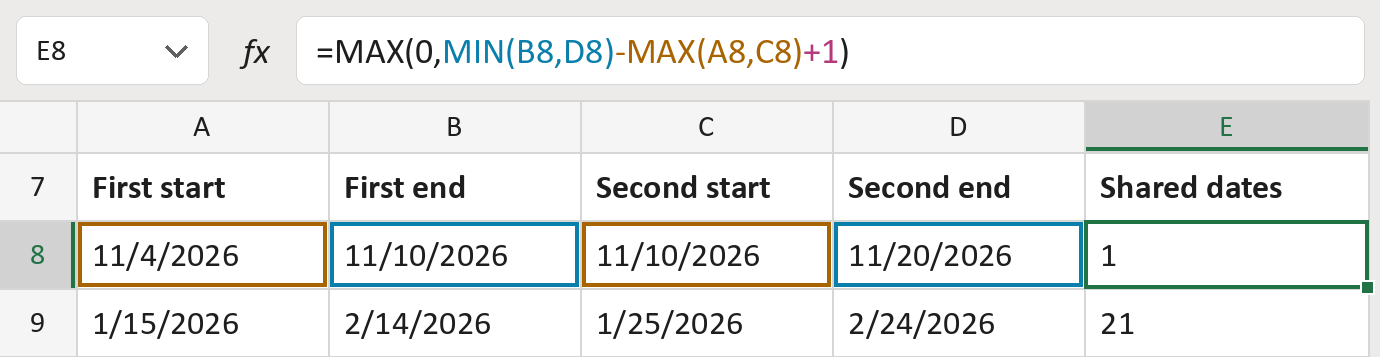
The formula

| Number | Part | What it does | Result so far |
|---|---|---|---|
| 1 | MIN(B8,D8) | The earlier of the two end dates. | 11/10/2026 |
| 2 | -MAX(A8,C8) | Takes away the later of the two start dates. | 0 |
| 3 | +1 | Adds one so both end dates count. | 1 |
| 4 | MAX(0, … ) | Shows 0 when the periods share no dates. | 1 |
Read it left to right. MAX wraps everything, so it works last. Both end dates count.
=MAX(0,MIN(B8,D8)-MAX(A8,C8)+1)How to use it
Yellow bar at the top? Click Enable Editing.
- See it work. The Example tab shows 20 made-up examples with the formula already in.
- Use your own dates. Paste each period's start and end dates into the green columns of the Template tab. The shared dates fill in by themselves.
- Move them into your letter. Copy the results. Then use Paste Special and choose Values.
Before you send
Put each start on or before its own end. If an end comes first, the count is wrong.
Microsoft's help: MIN function
OTHER ROUTES YOU MIGHT LIKE
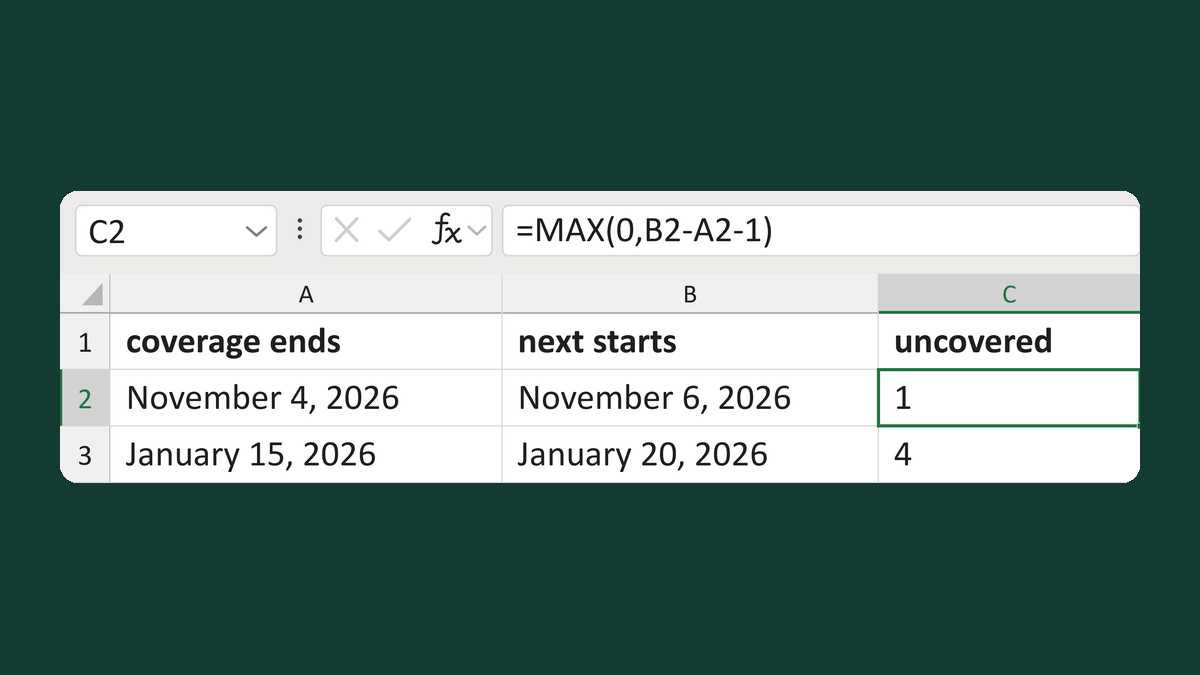
Count uncovered dates between periods
November 4, 2026 to November 6, 2026 → 1 uncovered date
Get the template →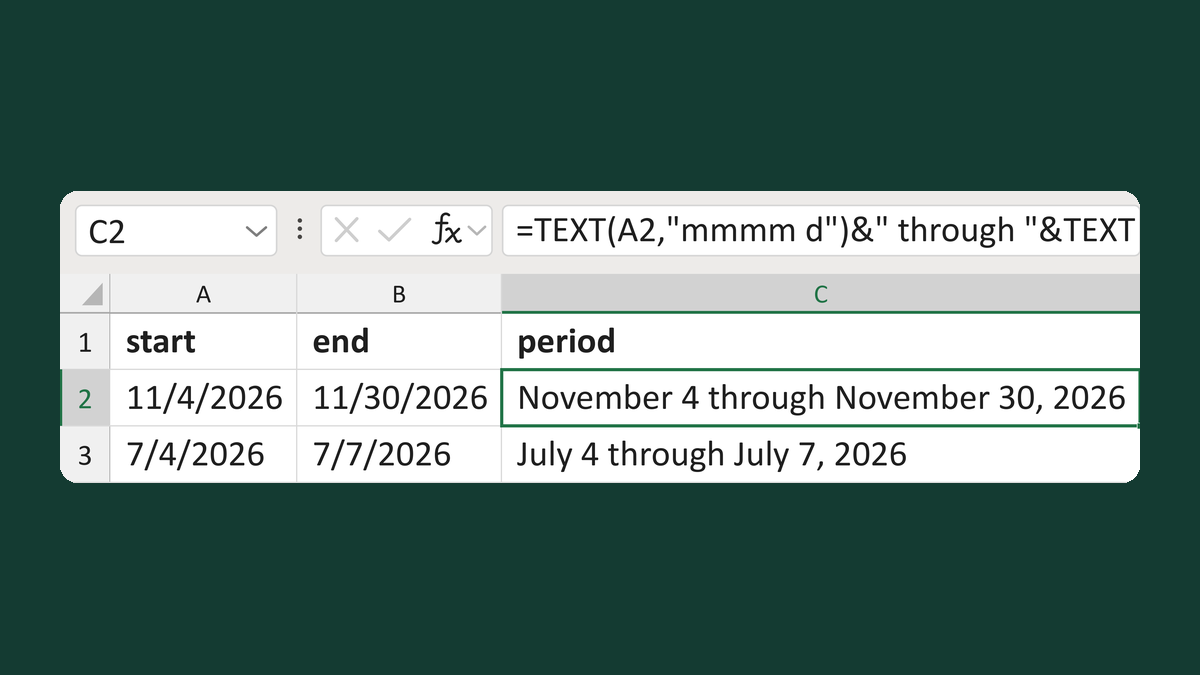
Write a named period from two dates
11/4/2026 to 11/30/2026 → November 4 through November 30, 2026
Get the template →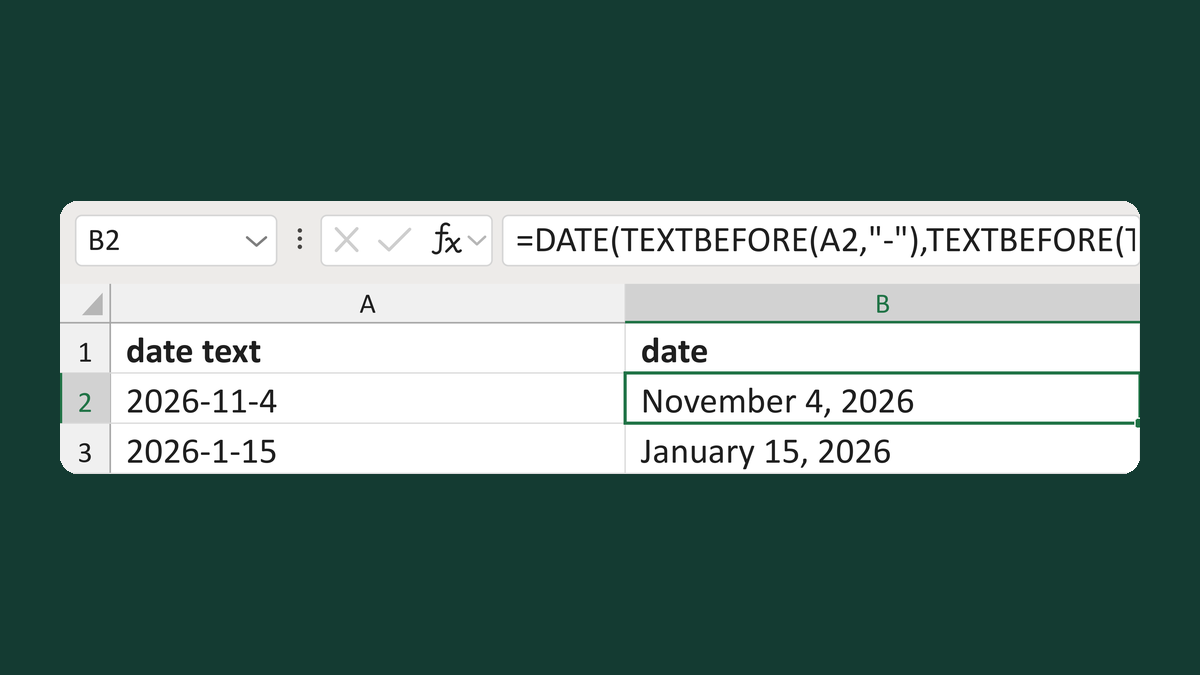
Convert variable-width year-first dates
2026-11-4 → November 4, 2026
Get the template →
Show a letter date as November 5, 2026
11/5/2026 → November 5, 2026
Take this route →