Count month boundaries between dates

Turn November 4, 2026 to December 1, 2026 into 1 month boundary.
What you'll make
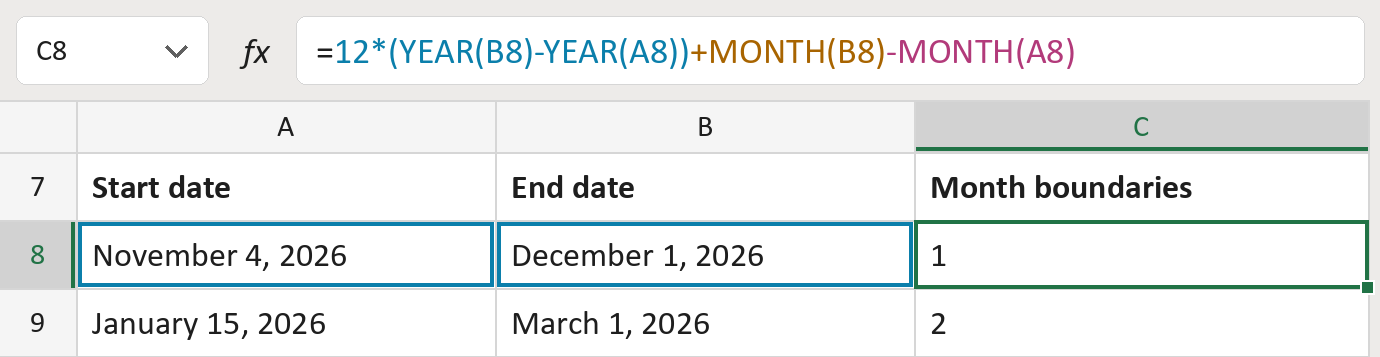
The formula

| Number | Part | What it does | Result so far |
|---|---|---|---|
| 1 | 12*(YEAR(B8)-YEAR(A8)) | Counts the years apart, as months. | 0 |
| 2 | +MONTH(B8) | Adds the end date's month number. | 12 |
| 3 | -MONTH(A8) | Takes away the start date's month number. | 1 |
Read it left to right. The day of the month is ignored: January 31 to February 1 counts 1.
=12*(YEAR(B8)-YEAR(A8))+MONTH(B8)-MONTH(A8)How to use it
Yellow bar at the top? Click Enable Editing.
- See it work. The Example tab shows 20 made-up examples with the formula already in.
- Use your own dates. Paste start dates and end dates into the green columns of the Template tab. The counts fill in by themselves.
- Move them into your letter. Copy the results. Then use Paste Special and choose Values.
Before you send
This counts month changes, not whole months. Put the earlier date in Start date, or you get a minus number.
Microsoft's help: MONTH function
OTHER ROUTES YOU MIGHT LIKE
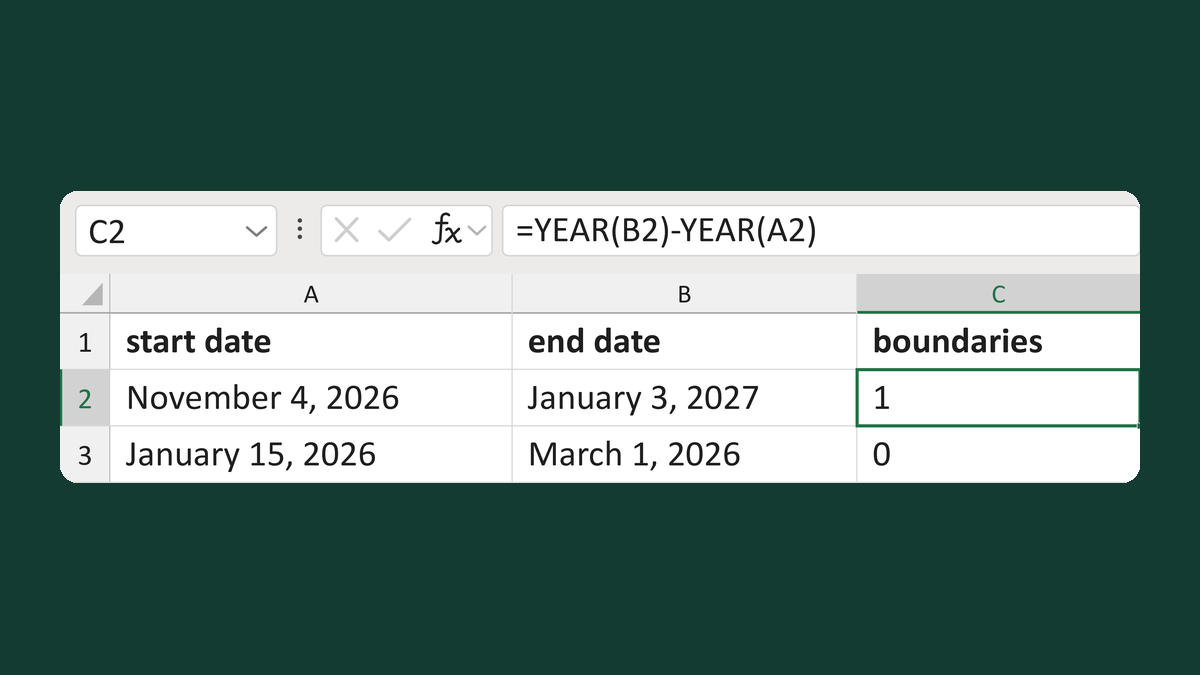
Count year boundaries between dates
December 31, 2026 to January 1, 2027 → 1 year boundary
Get the template →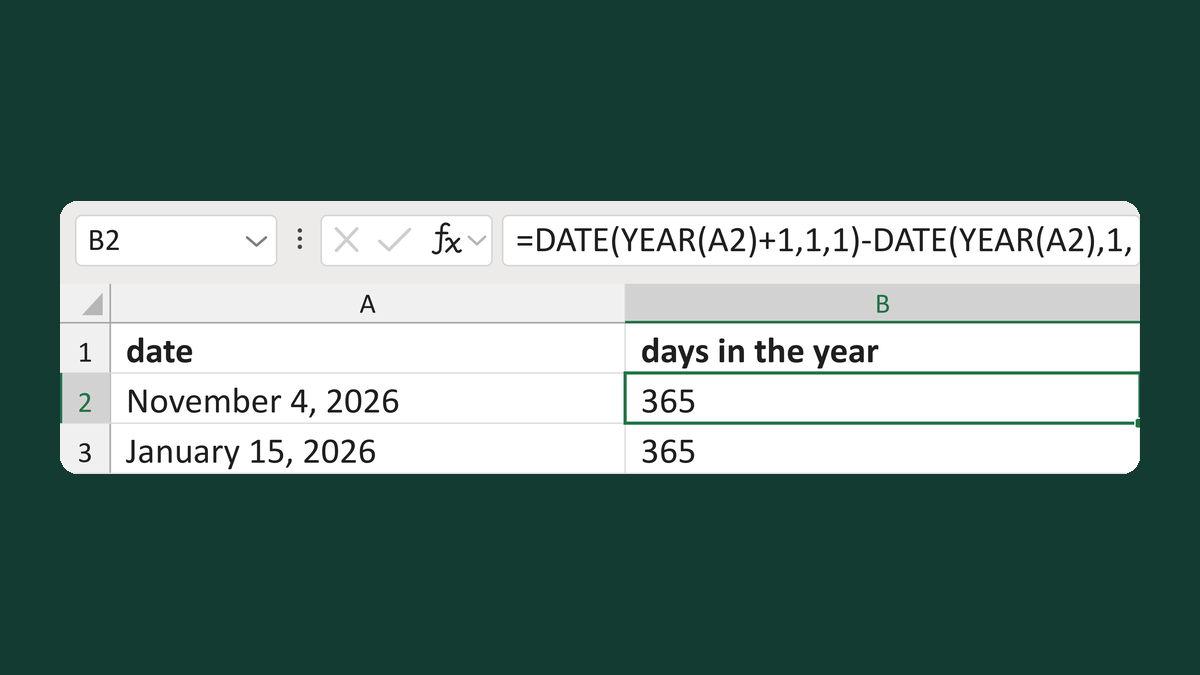
Count the days in a date’s year
February 29, 2024 → 366 days
Get the template →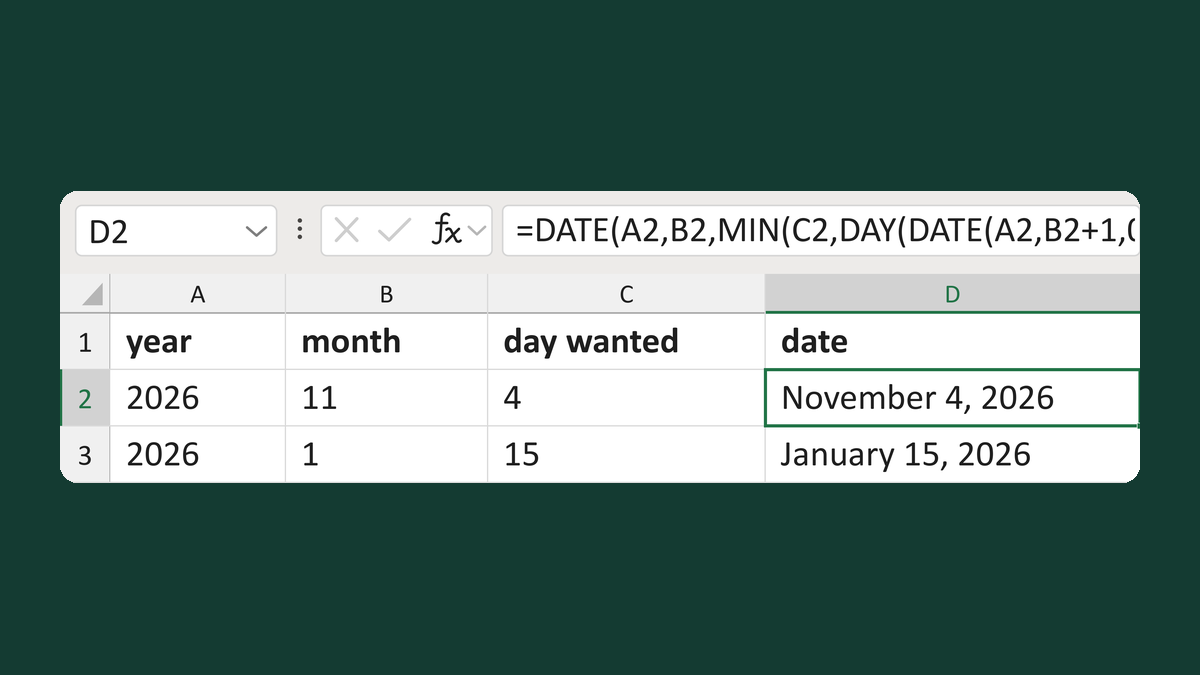
Build a date that stops at month-end
2026 + month 2 + day 31 → February 28, 2026
Get the template →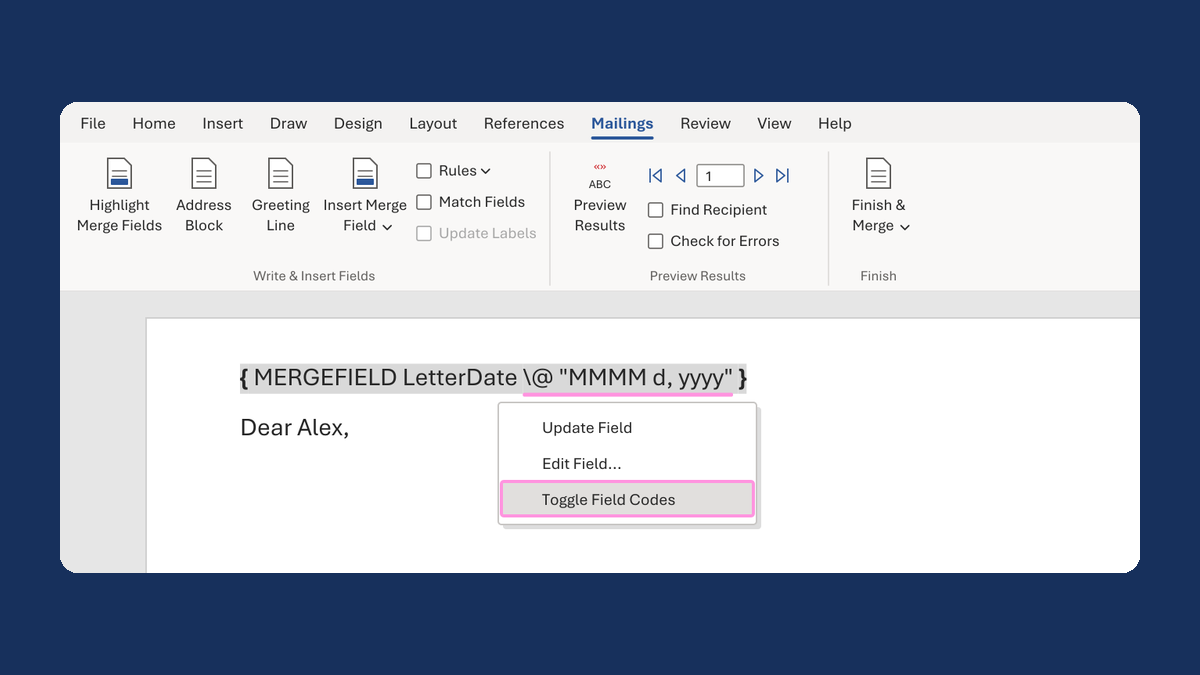
Show a letter date as November 5, 2026
11/5/2026 → November 5, 2026
Take this route →