Find the next annual date for an event

Turn November 4, 2026 and March 4, 2027 into November 4, 2027.
What you'll make
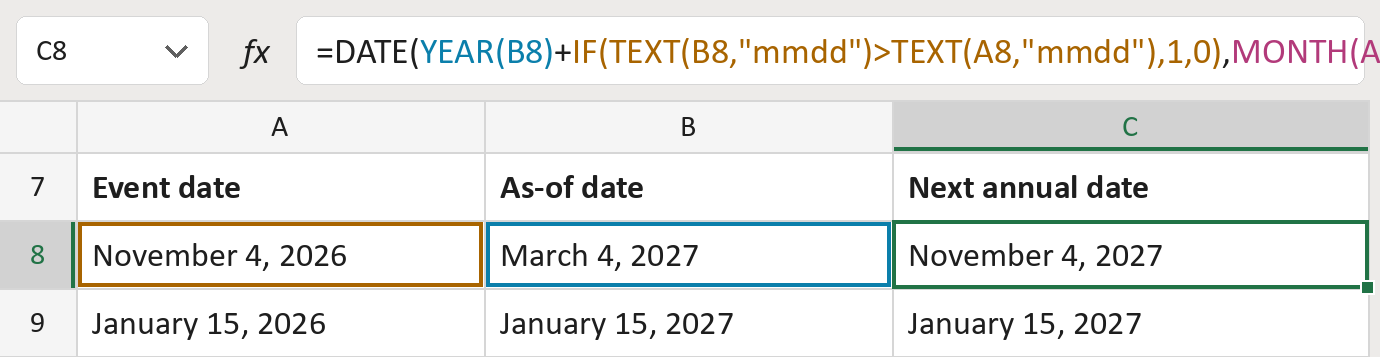
The formula

| Number | Part | What it does | Result so far |
|---|---|---|---|
| 1 | YEAR(B8) | The year of the as-of date. | 2027 |
| 2 | IF( … ) | Adds 1 year if this year's date has passed. | 0 |
| 3 | MONTH(A8) | The month of the event. | 11 |
| 4 | DAY(A8) | The day of the event. | 4 |
| 5 | DATE( … ) | Puts the year, month and day together as a date. | November 4, 2027 |
Read it left to right. Only the event's month and day are used, not its year.
=DATE(YEAR(B8)+IF(TEXT(B8,"mmdd")>TEXT(A8,"mmdd"),1,0),MONTH(A8),DAY(A8))How to use it
Yellow bar at the top? Click Enable Editing.
- See it work. The Example tab shows 20 made-up examples with the formula already in.
- Use your own dates. Paste event dates and as-of dates into the green columns of the Template tab. The next dates fill in by themselves.
- Move them into your letter. Copy the results. Then use Paste Special and choose Values.
Before you send
Leave out February 29 events. In other years they move to March 1.
Microsoft's help: DATE function
OTHER ROUTES YOU MIGHT LIKE
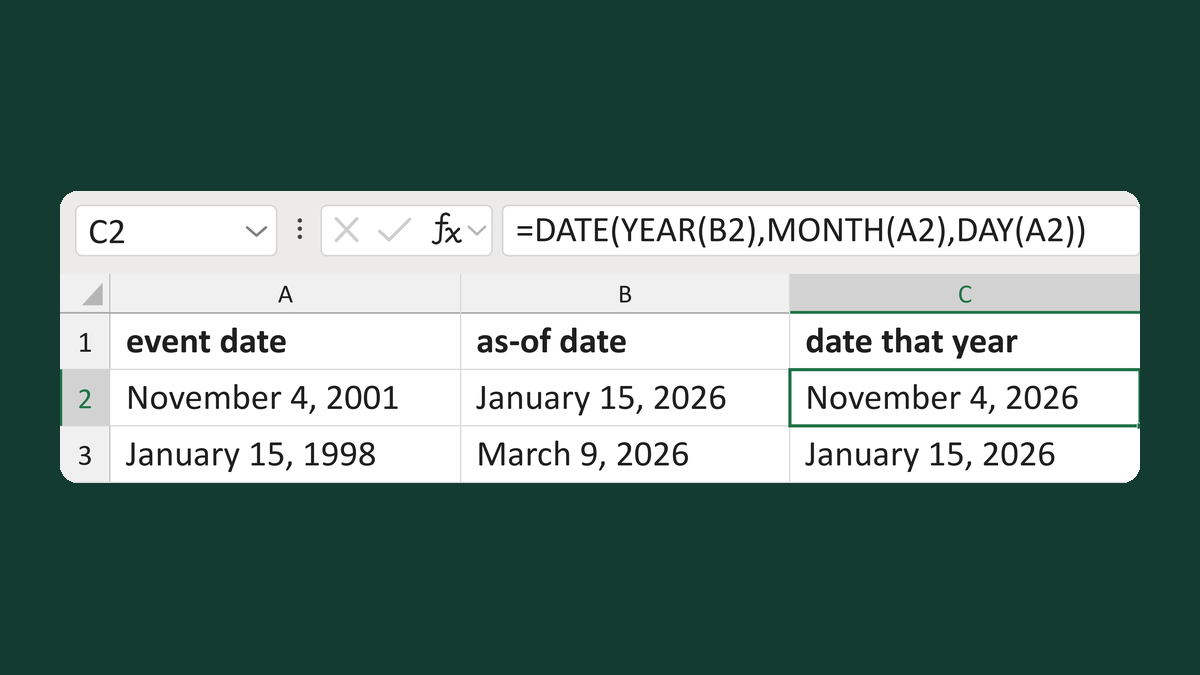
Place an annual event into the as-of year
November 4, 2001 into January 15, 2026 → November 4, 2026
Get the template →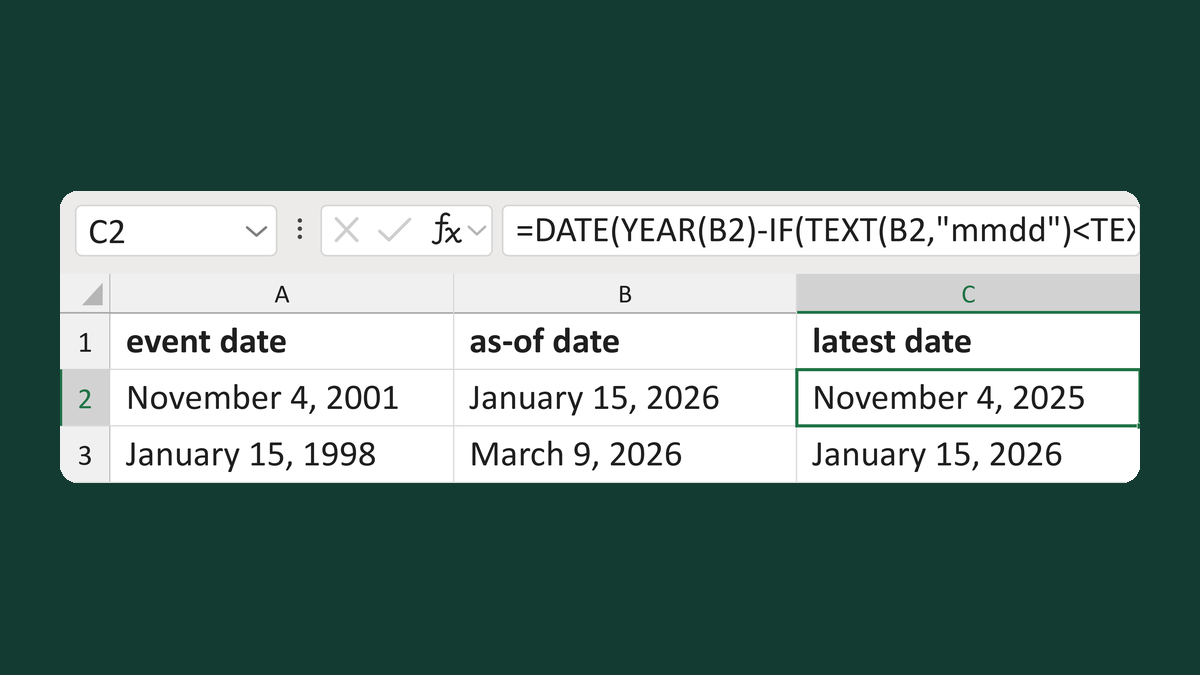
Find the most recent anniversary
November 4, 2001 and January 15, 2026 → November 4, 2025
Get the template →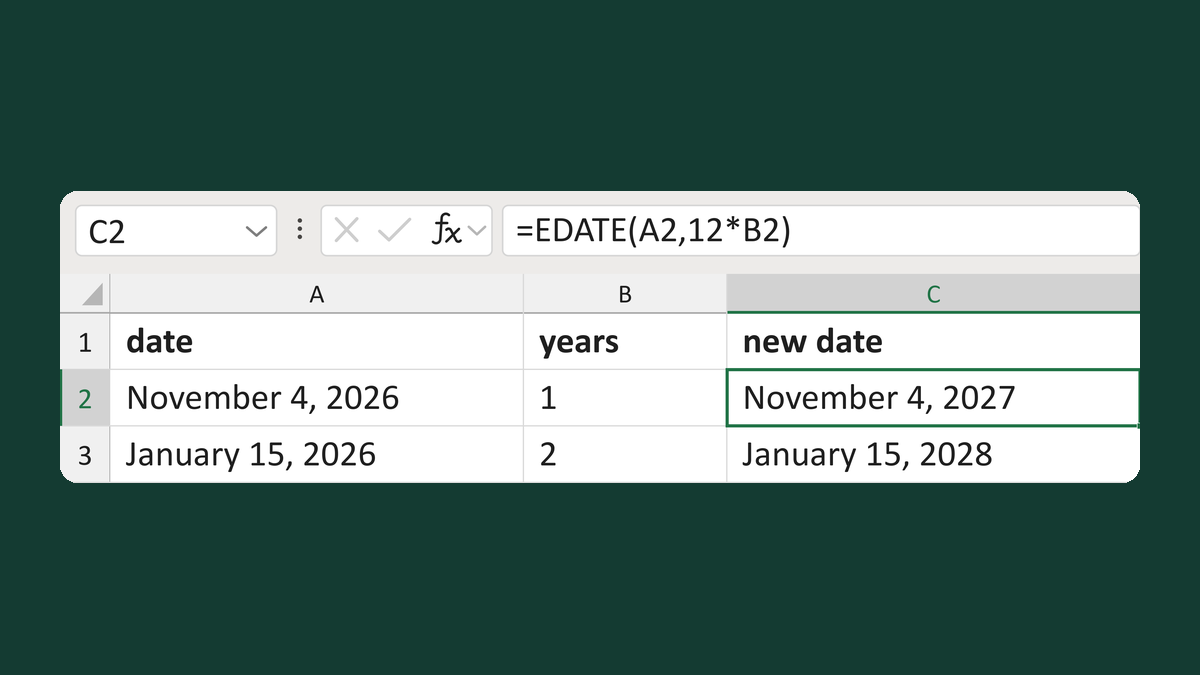
Move a date by whole years
February 29, 2024 + 1 year → February 28, 2025
Get the template →
Show a letter date as November 5, 2026
11/5/2026 → November 5, 2026
Take this route →