Get a preferred name from parentheses

Pull Avie out of Ava (Avie) Reed, so the name people use has its own column.
Download Excel templateMicrosoft 365
What you'll make
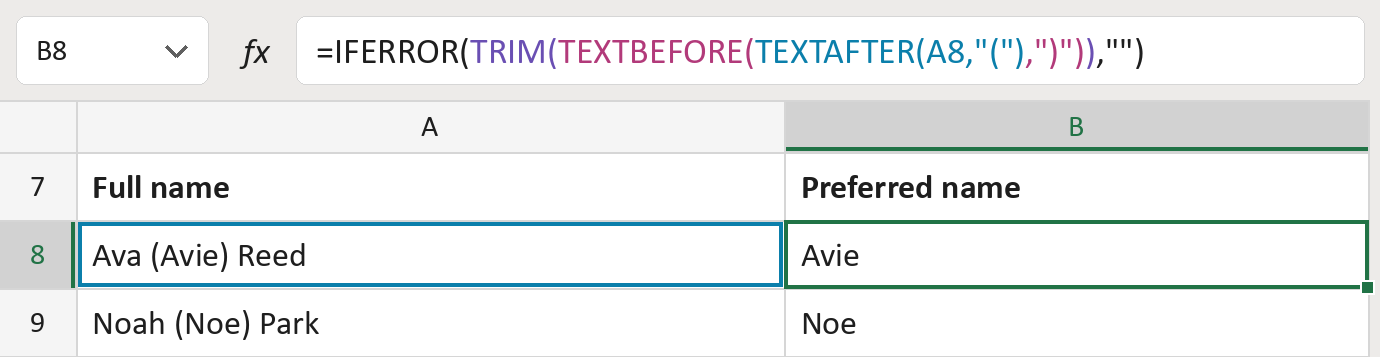
The formula
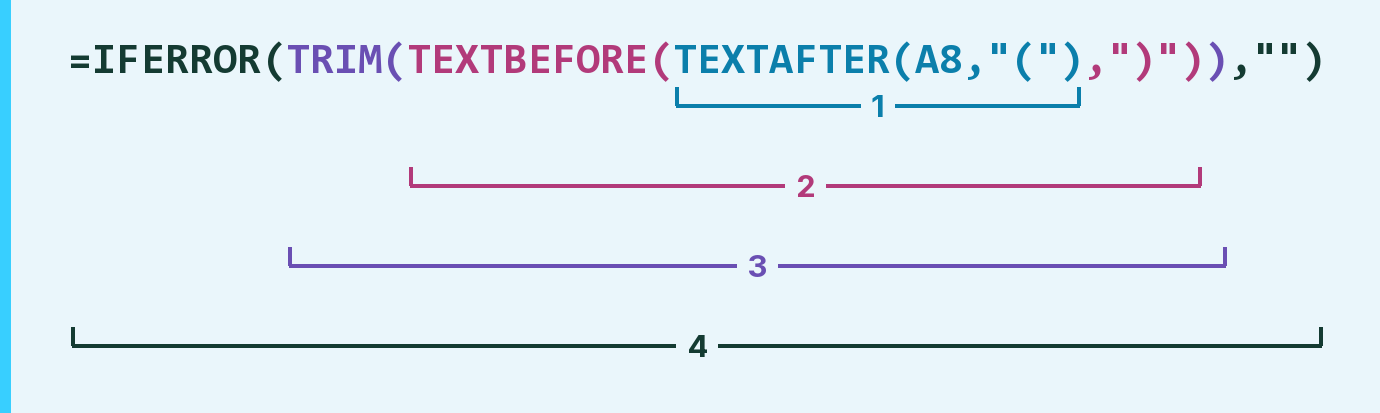
| Number | Part | What it does | Result so far |
|---|---|---|---|
| 1 | TEXTAFTER(A8,"(") | Takes what comes after the opening parenthesis. | "Avie) Reed" |
| 2 | TEXTBEFORE( … ,")") | Keeps what comes before the closing parenthesis. | "Avie" |
| 3 | TRIM( … ) | Removes any spaces left at the ends. | "Avie" |
| 4 | IFERROR( … ,"") | Shows nothing when a parenthesis is missing. | "Avie" |
Each bracket wraps the one above it, so Excel works from the inside out.
=IFERROR(TRIM(TEXTBEFORE(TEXTAFTER(A8,"("),")")),"")How to use it
Yellow bar at the top? Click Enable Editing.
- See it work. The Example tab shows 20 made-up names with the formula already in.
- Use your own names. Paste full names into the green column of the Template tab. Preferred names fill in by themselves.
- Move them into your letter. Copy the results. Then use Paste Special and choose Values.
Before you send
Only the first pair of parentheses is used, and a missing one gives a blank. Check blank rows and names with two pairs by hand.
Route: Get names ready for the letter
Microsoft's help: TEXTBEFORE function
OTHER ROUTES YOU MIGHT LIKE
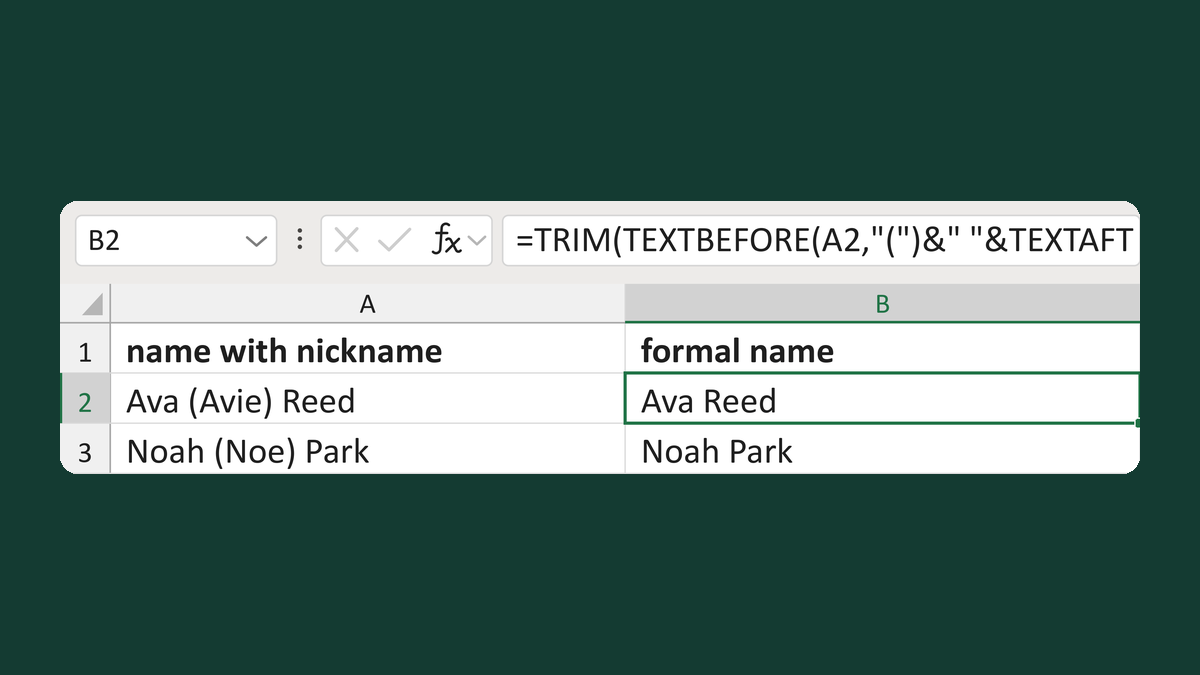
Keep the formal name around nicknames
Ava (Avie) Reed → Ava Reed
Get the template →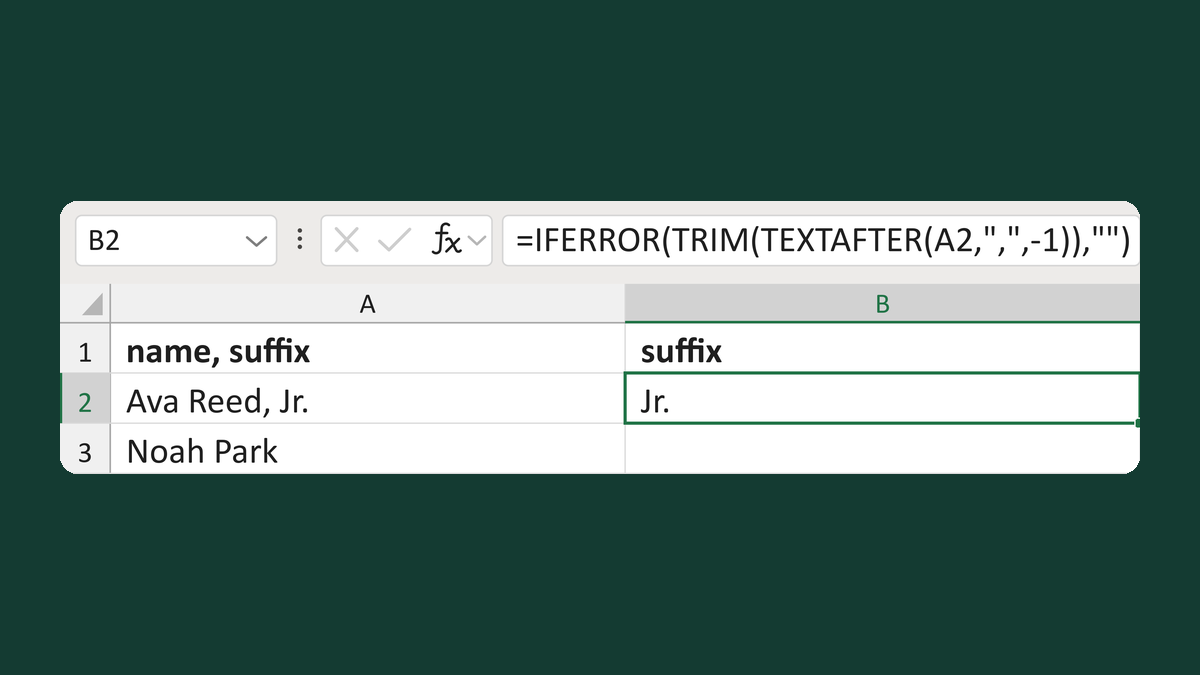
Get a suffix after the last comma
Ava Reed, Jr. → Jr.
Get the template →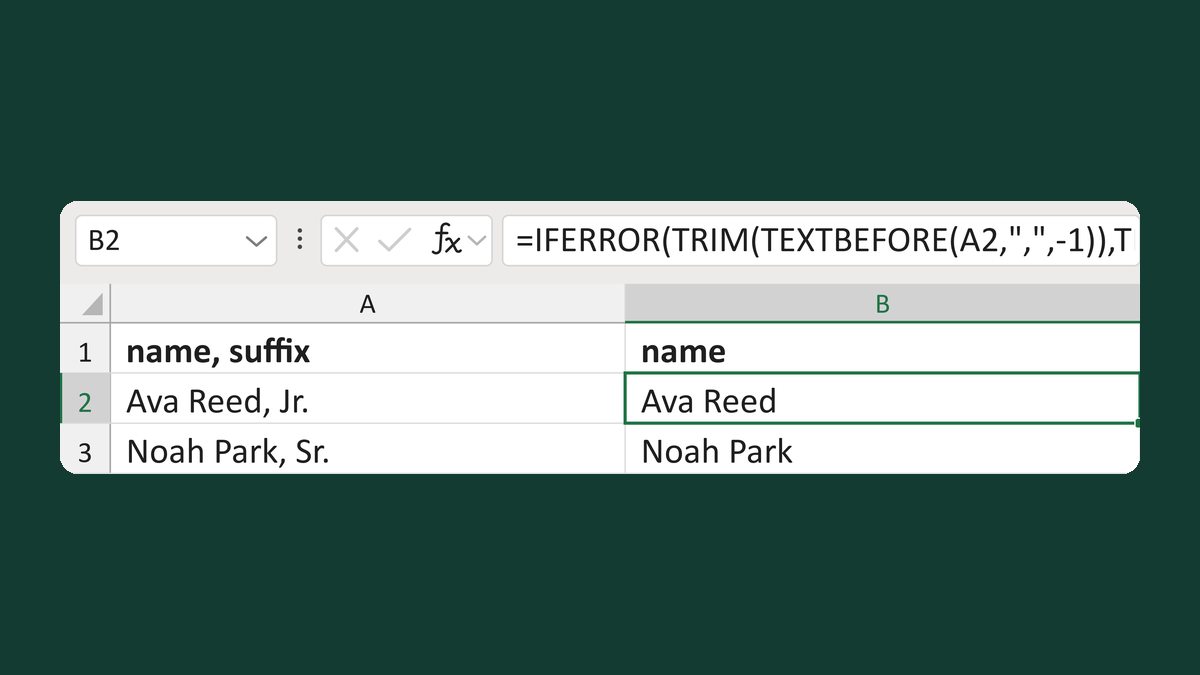
Separate a name from a comma suffix
Ava Reed, Jr. → Ava Reed
Get the template →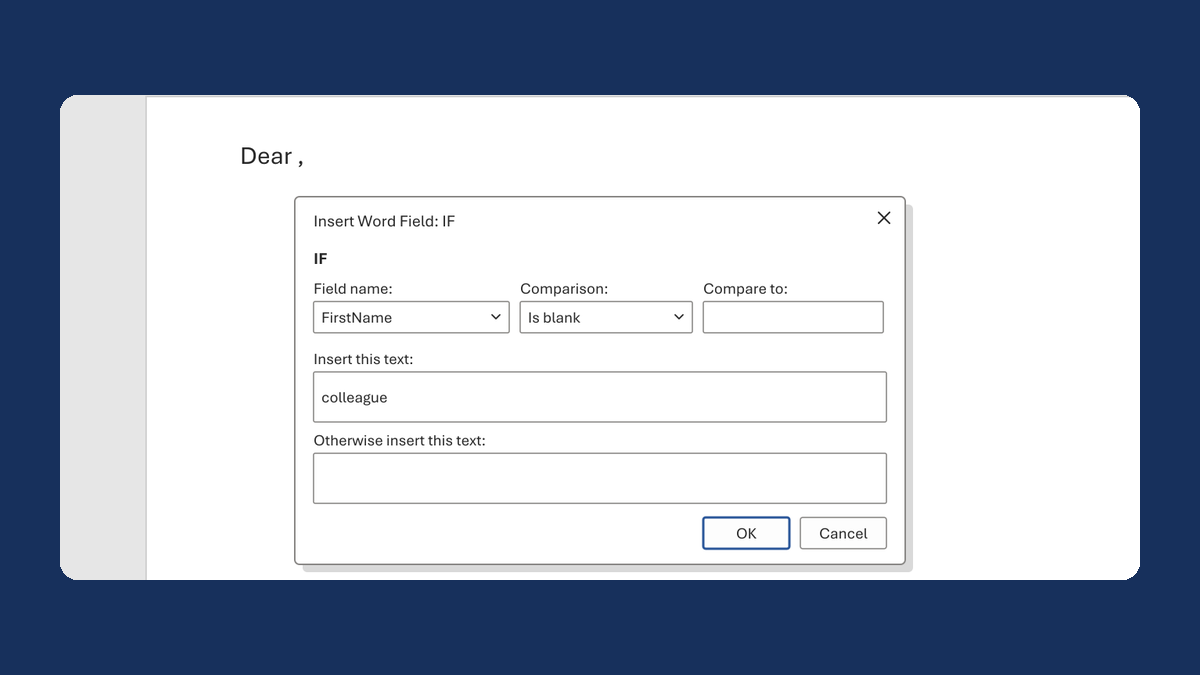
Fix "Dear ," when a first name is blank
(blank) → Dear colleague,
Take this route →