Read seconds since 1582 as timestamps

Turn an SPSS datetime value like 14013181815 into November 4, 2026 2:30:15 PM.
What you'll make
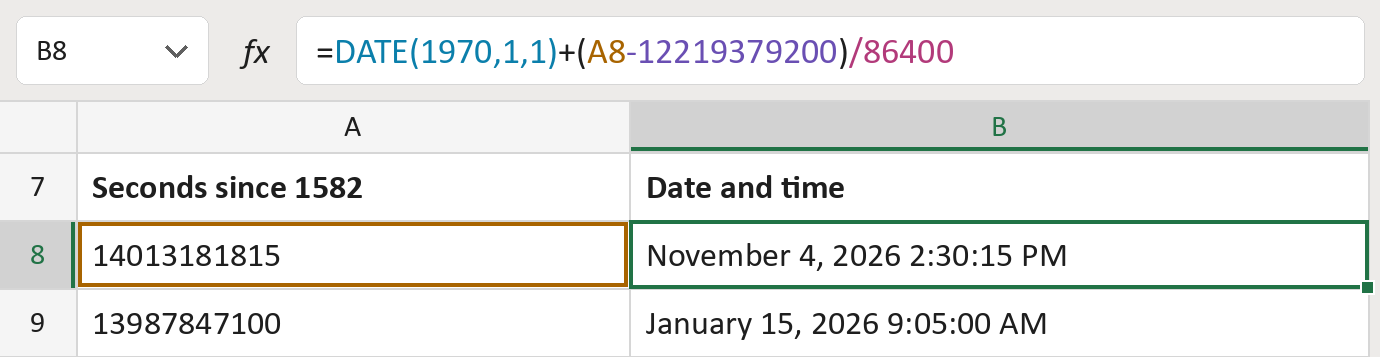
The formula

| Number | Part | What it does | Result so far |
|---|---|---|---|
| 1 | DATE(1970,1,1) | A start day Excel can handle. | January 1, 1970 |
| 2 | A8 | The seconds since October 14, 1582. | 14013181815 |
| 3 | -12219379200 | Takes away the seconds from 1582 to 1970. | 1793802615 |
| 4 | /86400 | Turns seconds into days: 86,400 in a day. | November 4, 2026 2:30… |
Read it left to right. Excel counts from 1970 instead of 1582, then adds the days.
=DATE(1970,1,1)+(A8-12219379200)/86400How to use it
Yellow bar at the top? Click Enable Editing.
- See it work. The Example tab shows 20 made-up examples with the formula already in.
- Use your own numbers. Paste seconds like 14013181815 into the green column of the Template tab. The dates and times fill in by themselves.
- Move them into your letter. Copy the results. Then use Paste Special and choose Values.
Before you send
Check the SPSS field holds a full date and time. A time-only field, like 52215, shows #### instead.
Microsoft's help: DATE function
OTHER ROUTES YOU MIGHT LIKE
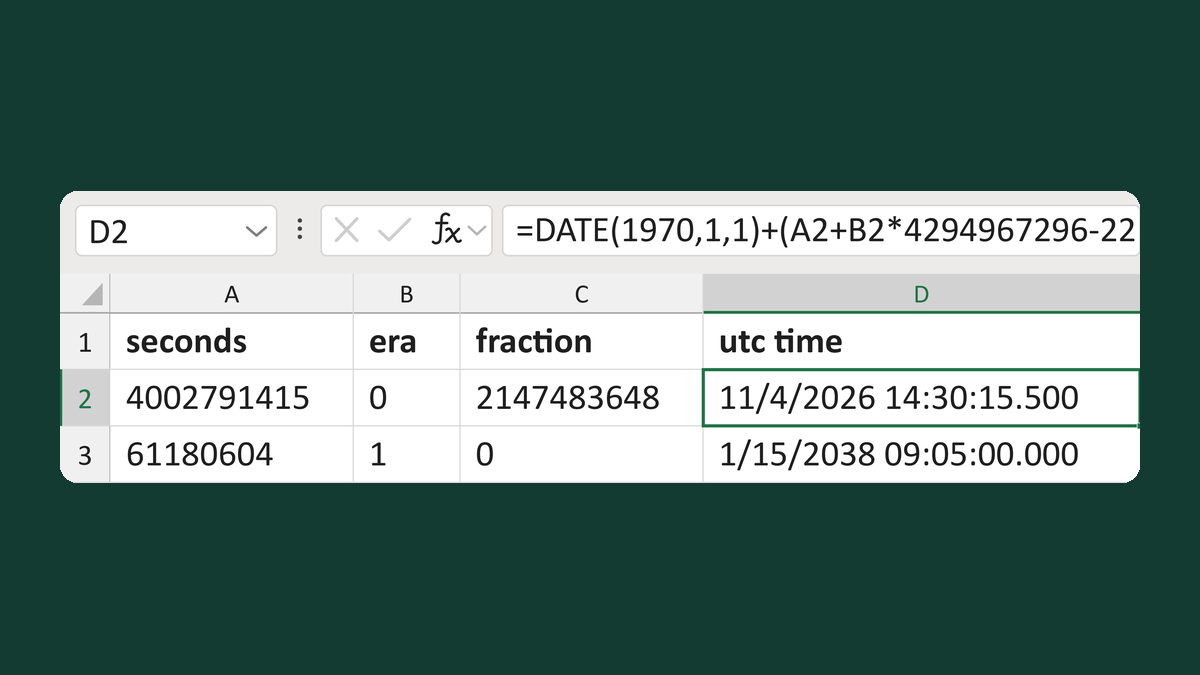
Read network time with a known era
4002791415, era 0, 2147483648 → 11/4/2026 14:30:15.500
Get the template →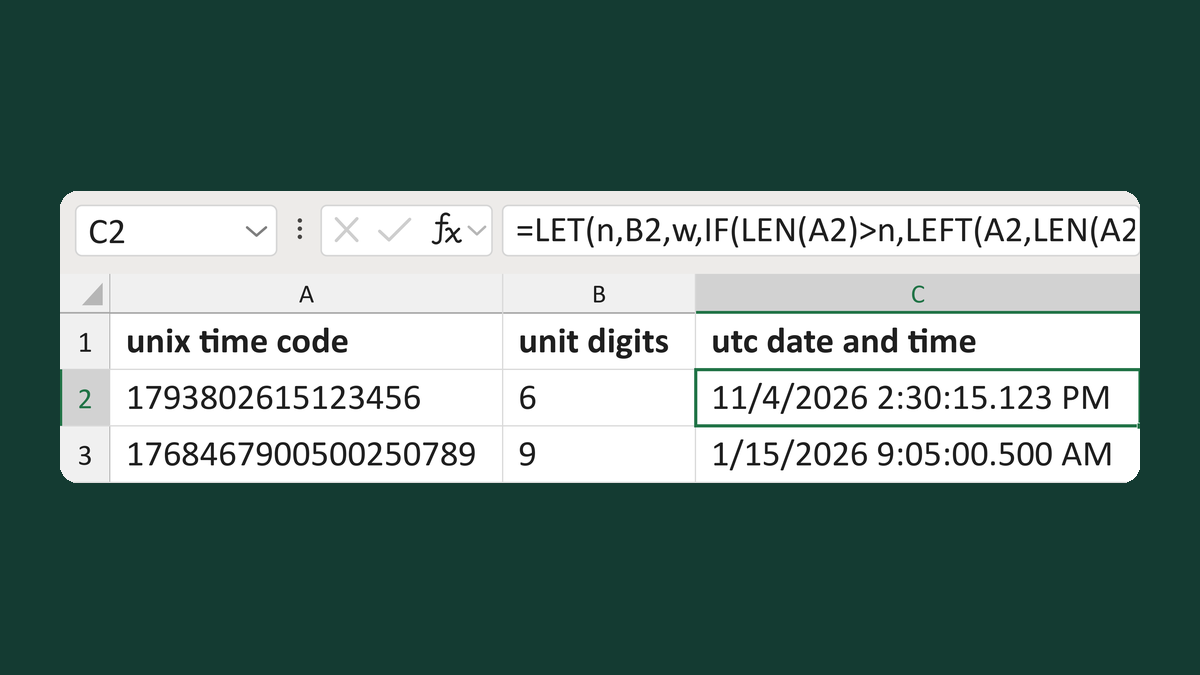
Read long Unix time codes kept as text
Unix microseconds 1793802615123456 → 11/4/2026 2:30:15.123 PM
Get the template →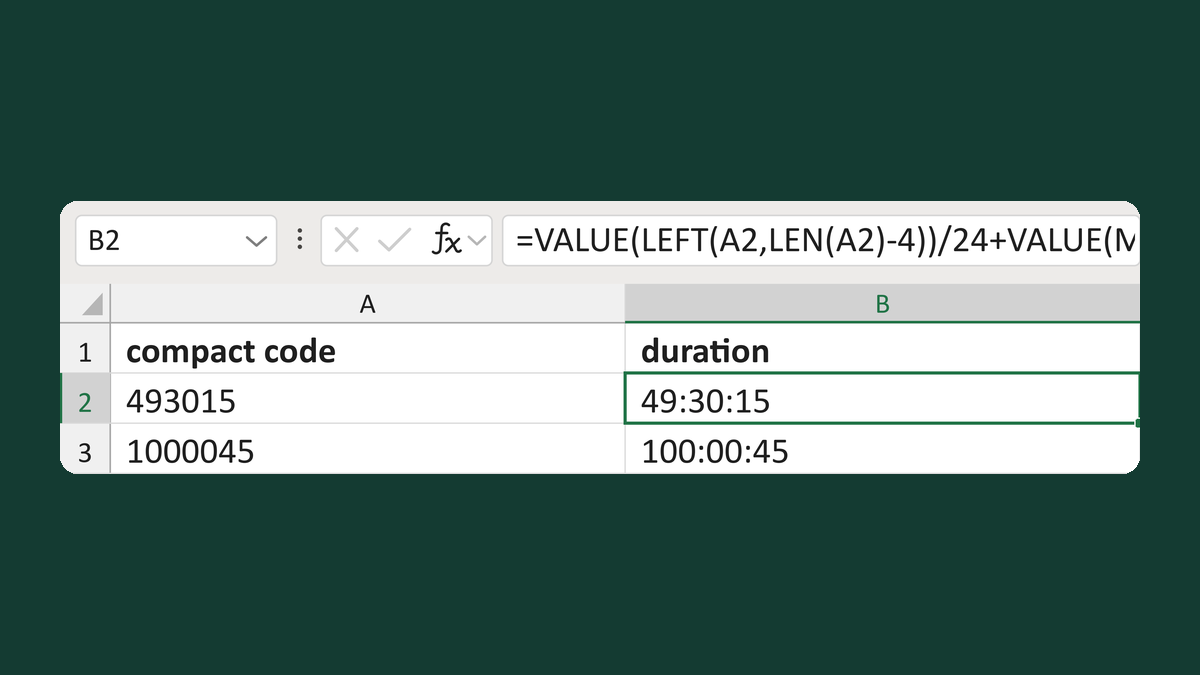
Read compact elapsed time like 493015
493015 → 49:30:15, not 1:30:15
Get the template →
Show an appointment time as 1:05 PM
13:05:00 → 1:05 PM
Take this route →