Read Unix milliseconds as a timestamp

Turn 1793802615000 milliseconds into the UTC date and time: November 4, 2026 2:30:15 PM.
What you'll make
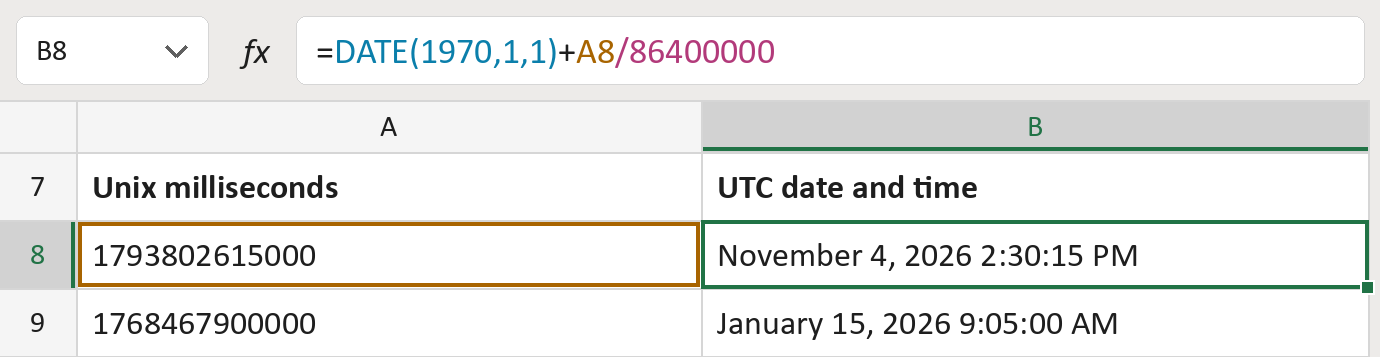
The formula

| Number | Part | What it does | Result so far |
|---|---|---|---|
| 1 | DATE(1970,1,1) | The day Unix time starts counting from. | January 1, 1970 |
| 2 | A8 | The milliseconds since then. | 1793802615000 |
| 3 | /86400000 | Turns milliseconds into days: 86,400,000 in a day. | November 4, 2026 2:30:15 PM |
Read it left to right. Excel adds the days to January 1, 1970, and keeps the time of day.
=DATE(1970,1,1)+A8/86400000How to use it
Yellow bar at the top? Click Enable Editing.
- See it work. The Example tab shows 20 made-up examples with the formula already in.
- Use your own numbers. Paste Unix milliseconds like 1793802615000 into the green column of the Template tab. The dates and times fill in by themselves.
- Move them into your letter. Copy the results. Then use Paste Special and choose Values.
Before you send
Check your numbers are milliseconds, usually 13 digits. Seconds have 10 and all land in January 1970.
Microsoft's help: DATE function
OTHER ROUTES YOU MIGHT LIKE
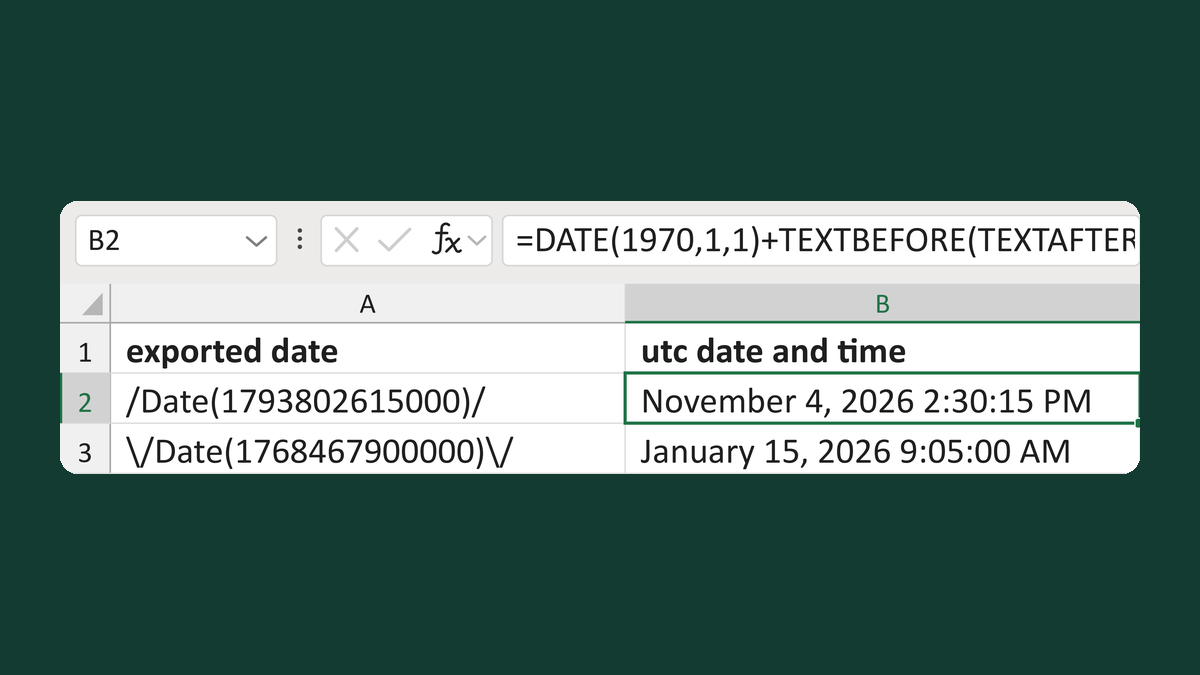
Read a /Date(…)/ value as a timestamp
/Date(1793802615000)/ → November 4, 2026 2:30:15 PM
Get the template →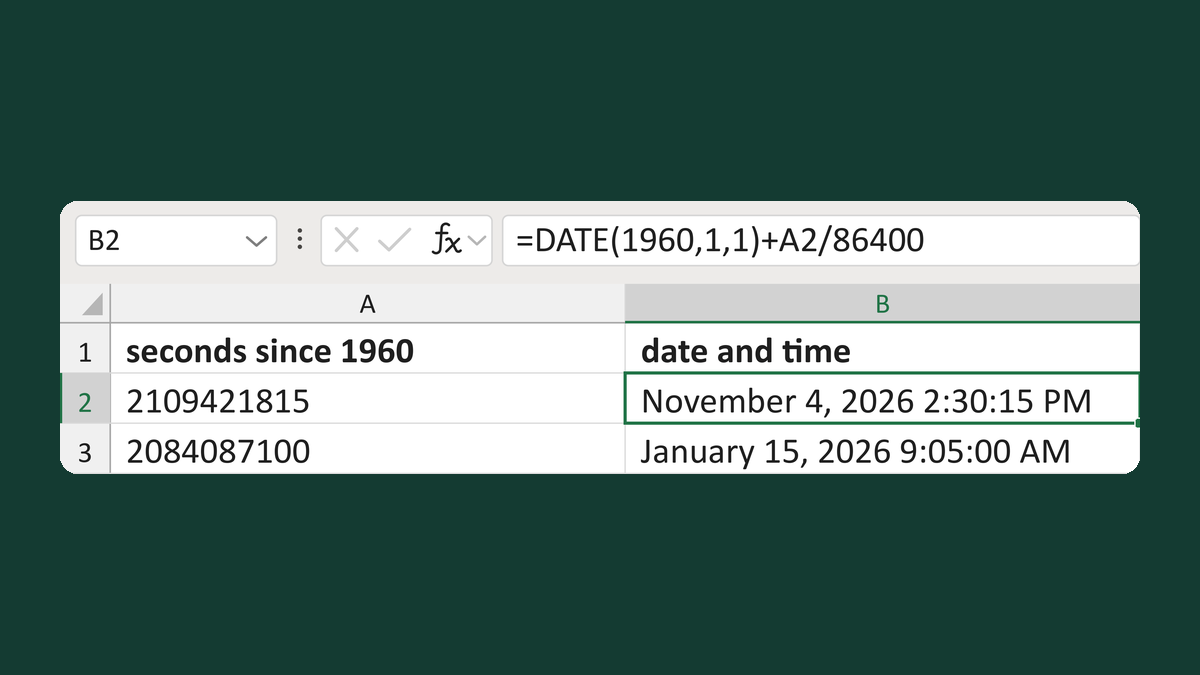
Read seconds since 1960 as timestamps
Seconds since 1960 2109421815 → November 4, 2026 2:30:15 PM
Get the template →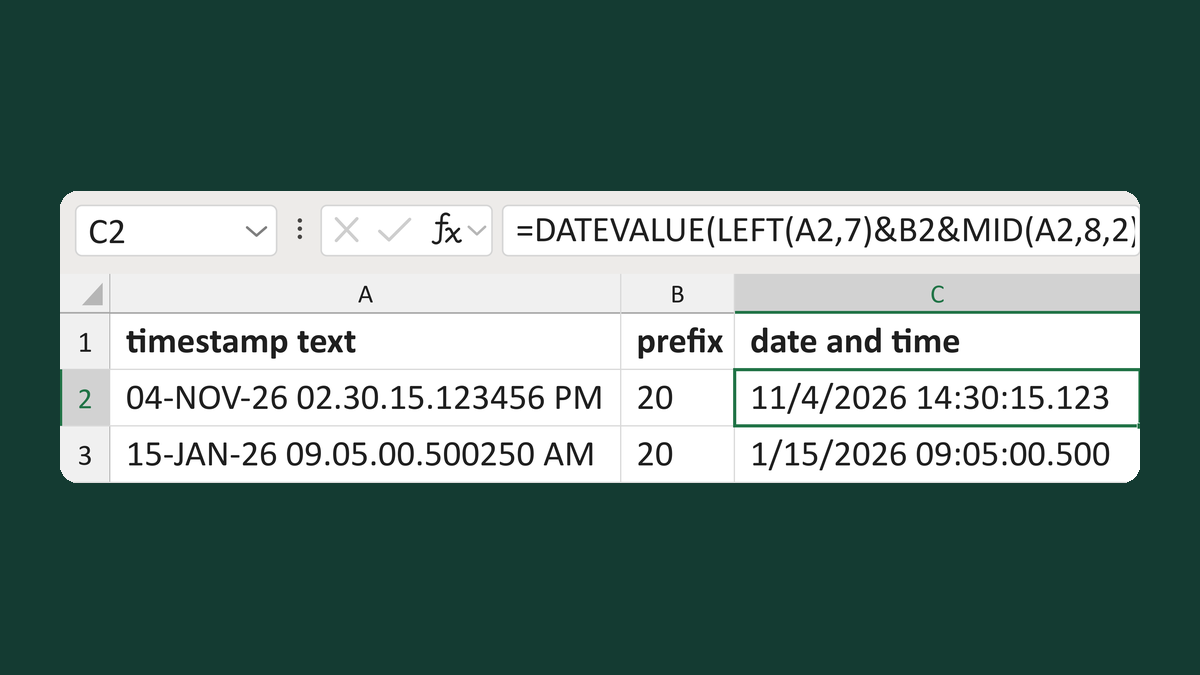
Read a timestamp with a century prefix
04-NOV-26 02.30.15.123456 PM + 20 → 11/4/2026 14:30:15.123
Get the template →
Show an appointment time as 1:05 PM
13:05:00 → 1:05 PM
Take this route →